WELCOME TO CYBERSECURITY INSIGHTS WITH THE FIT-TECH GUY!

Hello and welcome to CyberSecurity Insights, your ultimate destination for all things cybersecurity! I’m Jerrod Douglas, also known as The Fit-Tech Guy.


About Me: Curious to learn more about the face behind the blog? Click on the “About Me” page to discover more about my background, expertise, and passion for cybersecurity.


Categories: Ready to explore the world of cybersecurity? Click on any of the categories below to dive deeper into the topics that interest you:


Where to Start: New to cybersecurity? Click on “CyberStarter Tips” to kickstart your learning journey. Interested in mastering the fundamentals? Check out “Cyber Fundamentals” for essential topics. Want to hear from industry experts? Head over to “CyberPro Spotlight” for exclusive interviews. Ready to pursue certifications? Explore “Certification Chronicles” for invaluable reviews.


Get in Touch: Have a specific question or want tailored guidance? Feel free to reach out via the Stan Store link below to submit a request or schedule a call.

Warm regards, Jerrod Douglas The Fit-Tech Guy

  • As a veteran, you’ve already proven your ability to adapt, learn quickly, and handle challenging environments. Now, you’re considering transitioning into a new field—technology. You may feel overwhelmed, uncertain where to start, or even unsure if the tech industry is the right fit for you. Let me assure you, the skills you’ve developed in the military are more transferable than you think, and the tech industry is an excellent place to leverage them.

    In this post, we’ll break down how to transition into tech as a veteran, what makes the tech field a great fit, and how you can make your move effectively and efficiently. Whether you’re aiming for cybersecurity, software development, data analysis, or any other role in tech, this guide is designed to help you succeed.

    1. Identifying Transferable Skills

    One of the first things to recognize is that your military experience has already equipped you with a set of skills that are highly valuable in tech. Problem-solving, teamwork, leadership, and attention to detail are just a few. Whether you were troubleshooting equipment, managing personnel, or analyzing complex situations, you’ve gained experience that’s applicable in the tech world.

    If you’re considering cybersecurity, for example, your experience handling classified information or working with security protocols directly aligns with many roles in that field. Understanding how to apply those experiences to your tech career is key to standing out as a strong candidate.

    2. Researching Tech Roles That Fit Your Interests

    The tech industry is vast, and there are many paths you can take. But to make your transition smoother, it’s crucial to identify specific fields that match both your interests and your strengths. Are you drawn to defending systems from cyber threats? Cybersecurity could be your path. Enjoy breaking down data? Data analysis might be a good fit. Maybe you like problem-solving through code—software engineering may be your calling.

    Spend time researching various roles to see which ones resonate with you. There are many online resources available (which we’ll list at the end) that provide detailed overviews of what each tech career entails.

    3. Seeking Education and Certification

    Veterans often have access to GI Bill benefits that can cover education and training in tech. There are countless certification programs, online courses, and bootcamps tailored to veterans who are transitioning into tech.

    Some popular certifications to consider include:

    • CompTIA A+ for IT fundamentals
    • CompTIA Security+ for cybersecurity basics
    • AWS Certified Cloud Practitioner for cloud computing
    • Certified Ethical Hacker (CEH) if you’re interested in penetration testing

    Leverage these programs to build your knowledge and show employers that you’re serious about your new career. Many tech companies look for certifications as proof of a candidate’s readiness for a role.

    4. Networking: Building Connections in Tech

    One thing that’s often overlooked in a career transition is the importance of networking. Your military network is strong, but now it’s time to start building your tech network. Start connecting with people on LinkedIn who are already working in the industry. Attend tech meetups, webinars, and online events where you can meet professionals and learn more about the field. Many veterans have successfully transitioned to tech, and they can provide valuable advice and mentorship.

    Consider joining veteran-specific tech organizations and programs. Organizations like Vets in Tech and Operation Code provide resources, training, and mentorship to help veterans break into the tech industry.

    5. Transition Programs for Veterans

    There are several programs specifically designed to help veterans transition into tech careers. For instance:

    • DoD SkillBridge: A program that connects service members to internships and training programs with tech companies during their last 180 days of service.
    • Onward to Opportunity (O2O): A career training program that offers free tech certifications to veterans and military spouses.
    • Veterans Employment Through Technology Education Courses (VET TEC): A VA program that covers the cost of training programs in high-demand tech fields.

    These programs provide a direct pathway to the skills, certifications, and networking opportunities you need to start a successful tech career.

    Conclusion:

    Transitioning into the tech industry as a veteran can feel like a daunting challenge, but it doesn’t have to be. The key is recognizing the value of the skills you’ve already gained in the military, researching the tech fields that align with your interests, and leveraging the many resources available to help veterans make the shift. With dedication, education, and the right connections, you can build a fulfilling, high-paying career in tech.

    As you explore this journey, remember that the tech industry needs people with your unique perspective, discipline, and experience. The opportunities are out there—you just need to take the first step and commit to the process.


    Resources for Veterans Transitioning into Tech:

    1. Vets in Techhttps://vetsintech.co
      A community that supports veterans through tech education, entrepreneurship, and employment opportunities.
    2. DoD SkillBridgehttps://dodskillbridge.usalearning.gov
      A program offering internships and job training in the tech sector for transitioning service members.
    3. Onward to Opportunity (O2O)https://onward2opportunity.org
      Provides free tech training and certifications for veterans and military families.
    4. Operation Codehttps://operationcode.org
      A nonprofit that helps veterans learn to code and land software development jobs.
    5. Veterans Employment Through Technology Education Courses (VET TEC)https://www.va.gov/education/about-gi-bill-benefits/how-to-use-benefits/vet-tec
      A VA program offering training in tech fields with GI Bill benefits.
    6. LinkedIn for Veteranshttps://linkedin.com/military
      Free premium LinkedIn membership for veterans to build their professional network.
    7. VA Certification Reimbursement Program: Veterans can take advantage of the VA’s Certification Reimbursement Program, which reimburses the cost of certification exams, making it easier to achieve necessary credentials without financial strain. Learn more about how to use your GI Bill benefits for certification and test fees here: VA CertificationReimbursement Program.
  • By Jerrod Douglas


    Understanding the Security+ Certification: Your First Step in Cybersecurity

    The Computing Technology Industry Association (CompTIA) Security+ certification is one of the most well known certifications for beginners. It is a foundational certification which gives a broad based introduction to a wide range of security concepts including general security concepts, threats, vulnerabilities & mitigations, security architecture, security operations, and security program management and oversight.

    “The CompTIA Security+ certification exam will verify the successful candidate has the knowledge and skills required to assess the security posture of an enterprise environment and recommend and implement appropriate security solutions; monitor and secure hybrid environments, including cloud, mobile, and IoT; operate with an awareness of applicable laws and policies, including principles of governance, risk, and compliance; identify, analyze, and respond to security events and incidents”
    CompTIA.org

    As a beginner, many of these concepts might sound overwhelming, so let me simplify why the Security+ certification is a great starting point for your cybersecurity journey. The Security+ certification gives you a broad overview of various cybersecurity aspects, helping you decide which path to pursue next. These paths can range from network security and cloud security to penetration testing or cyber defense. There are good alternatives to the Security+, such as the GIAC GSEC certification, but the Security+ is more cost-effective.


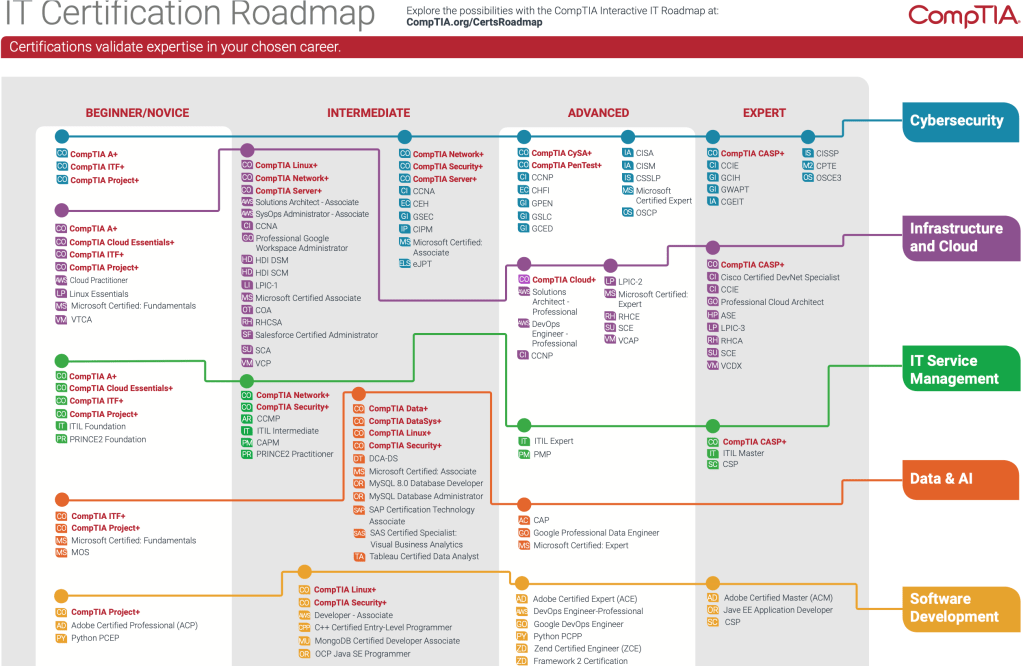
    CompTIA IT Certification Roadmap

    As you can see in the above roadmap provided by CompTIA which is one of the many good roadmaps you can find, the Security+ certification falls in the intermediate level category. Now you may ask “Jerrod, if I am a beginner why would I go for an intermediate level certification?”. I will discuss this in my next section.


    The Value of Security+: Why This Certification Matters in the Cybersecurity World

    Knowledge

    The broad scope of the Security+ certification allows you to explore different areas within cybersecurity, helping you decide if this field is the right fit for you. If you are certain about a career in cybersecurity, you might consider skipping some beginner certifications listed on the CompTIA IT Certification Roadmap, as they might not be directly relevant to your chosen path. The Security+ certification also provides a solid introduction to networking concepts, which are crucial for any cybersecurity role. By the end of your preparation, you’ll have a good grasp of foundational security concepts and a clearer idea of your future career path in cybersecurity.

    Employment

    While passion is essential, we all aim for well-compensated employment. The Security+ certification is globally respected and recognized across private and public sectors. It meets U.S. DoD Directive 8140/8570.01-M requirements, which are essential for many government roles. However, it’s important to note that the Security+ certification alone won’t guarantee a job. You can complement your certification knowledge to increase your marketability, which I will discuss in a future post. For entry-level roles, the Security+ certification is your best bet due to its balance of affordability and industry recognition.


    How to Study and Pass the Security+ Certification

    There are numerous study materials available for the Security+ exam, but you’ll want resources that are up-to-date with the latest exam version (SY0-701). CompTIA offers its own study materials, and platforms like Udemy provide courses and practice exams. YouTube is also a valuable resource for understanding complex topics.

    For the purposes of this blog, I will be giving the study materials and strategy I used. One important thing to note is BEFORE I sat for the Security+ exam I had completed my bachelor’s degree in Cyber Operations. With that being said, the study materials I used will be enough for a beginner with the dedication to learn the material and pass the exam.

    Study Material

    For my preparation, I used the Jason Dion CompTIA Security+ Course & Exam on Udemy, which costs around $15. This course covers all exam topics thoroughly, and the included practice exam is reputed to be as challenging, if not more so, than the actual exam. Supplementing this with additional practice exams from Professor Messer can diversify your preparation. I highly recommend using ChatGPT to clarify concepts and create concise study notes.

    Strategy

    Given my background in Cyber Operations, my strategy may differ from that of a beginner. Start by reviewing the exam objectives to identify your strengths and weaknesses. Choose your study materials and create a realistic study schedule, factoring in time for practice exams. Discipline is key, so consider finding an accountability partner. Schedule your exam to set a concrete goal. If you need to reschedule, try to avoid it unless absolutely necessary. This approach helps maintain focus and commitment to your study plan


    the way forward

    After passing your exam, plan your next steps both professionally and educationally. With foundational knowledge, you can pursue further learning, enter the job market (depending on your current qualifications and experience), and decide on a specific cybersecurity career path.

    If you fail the exam, don’t be discouraged. Failure is a delay, not defeat. Identify the areas where you need improvement, take a short break to recharge, and then dive back into your studies while the information is fresh. Repeated practice and review of wrong answers will prepare you for a successful second attempt.

    Good luck on your exam and feel free to contact me for any other assistance!


  • In today’s ever-evolving digital landscape, where every click and tap propels us further into the interconnected realm of technology, a new breed of heroes emerges – the cybersecurity analysts. Meet Jane, a young tech enthusiast with a passion for problem-solving and a knack for navigating the digital landscape. As she embarks on her journey into the world of cybersecurity, little does she know the thrilling adventures that await her.

    “Cybersecurity is the art of protecting networks, devices, and data from unauthorized access or criminal use and the practice of ensuring confidentiality, integrity, and availability of information.”

    CISA.GOV

    Section I: Unveiling the Cybersecurity Analyst

    So, what exactly does a cybersecurity analyst do? According to the Computer Science Organization, they’re the unsung heroes who protect the digital infrastructure of companies, nonprofits, and government agencies. From fortifying computer networks to thwarting potential threats, these tech-savvy warriors are the guardians of our digital realm. Jane realizes that her fascination with technology aligns perfectly with the skills and responsibilities of a cybersecurity analyst.

    A cybersecurity analyst is defined as someone who protects computer networks at companies, nonprofits, and government agencies. They work in computer systems design services, as well as in finance, insurance, and administration support services. There are a variety of traits that a prospective cybersecurity analyst may have. Some of the hard skills include network security management, security risk management, and project management. Analysts use these skills to implement strategies, evaluate security risks, and oversee teams that monitor systems to identify threats. But it’s not just about technical prowess; soft skills like perceptiveness and persistence are equally important. Jane learns that being able to see problems from different perspectives and staying determined in the face of challenges are essential traits for success in this field.

    Section II: The Cybersecurity Frontier: Opportunities and Rewards

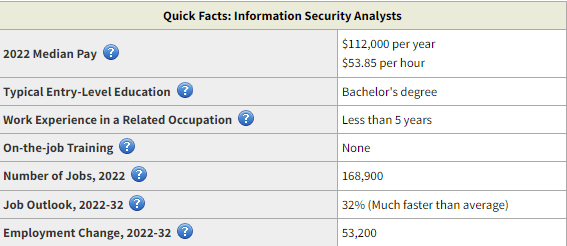
    As Jane delves deeper into her studies, she learns about the vast opportunities and rewards that await her in the cybersecurity career field. With cyber threats on the rise, the demand for cybersecurity professionals is soaring, and Jane knows she’s on the right path. According to the United States Bureau of Labor Statistics, the job outlook for cybersecurity analysts is projected to grow by a staggering 32% from 2022 to 2032. This rapid growth is driven by the increasing prevalence of cyber attacks on companies, governments, and organizations. Jane envisions herself at the forefront of innovation and defense, combating cyber threats and making a real difference in the digital world.

    There is a high prospect for employment in the cybersecurity career field. Cybersecurity professionals are needed to protect financial information, fraud, client records, and intellectual property. Many cybersecurity jobs are unmanned, and there is currently a large need for cybersecurity analysts across various sectors. The projected employment change for this occupation from 2022 to 2032 is 53,200. Jane realizes that with the right skills and determination, she can secure a rewarding career in cybersecurity and contribute to the protection of critical digital assets.

    Section III: Charting Your Course in Cybersecurity

    With her sights set on becoming a cybersecurity analyst, Jane navigates the twists and turns of education and career development. She understands the importance of obtaining a relevant bachelor’s degree, as 60% of entry-level cybersecurity jobs require one. Jane explores various pathways to success, from networking to software development, each leading to a career as a cybersecurity analyst or a related role. She learns that internships provide invaluable experience and increase the odds of employment after graduation, according to a study by the NACE Center for Career Development and Talent Acquisition.

    The career pathway of a cybersecurity analyst can vary, but Jane knows that obtaining a relevant bachelor’s degree is the first step. Graduate degrees can increase employment prospects and salary potential, but they are less required than bachelor’s degrees. Certifications also play a crucial role in job choices and salary. With a medium salary average of $112,000 per year, cybersecurity analysts are handsomely rewarded for their expertise and dedication. Jane realizes that with the right combination of education, experience, and certifications, she can carve out a successful and lucrative career in cybersecurity.

    “The only way to do great work is to love what you do.”

    Steve Jobs

    As Jane’s journey unfolds, she discovers the tantalizing salary potential that awaits her in the cybersecurity career field. With determination in her heart and a thirst for knowledge, Jane embarks on an exciting adventure into the world of cybersecurity, ready to become the next cyber hero.

    So, are you ready to join Jane on her journey? With thrilling challenges, lucrative rewards, and the opportunity to make a real difference in the digital realm, the cybersecurity career field awaits. Let’s embark on this adventure together and become the heroes of tomorrow’s digital world.